My second placement, in May – June 2022, was with St Hugh’s Music Academy, and took place primarily during the week rather than on Sundays. My role consisted of supporting the Music Academy by welcoming students and their parents, dealing with some of the admin, and assisting with the group teaching sessions.
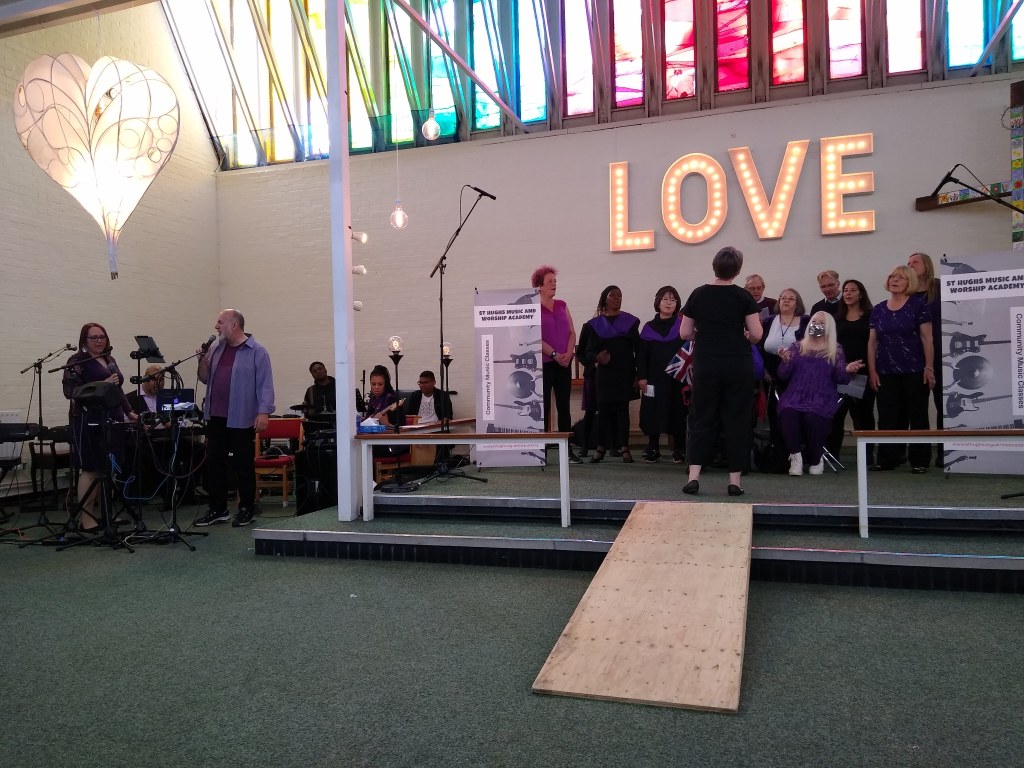
I also helped to set up a community choir. The first performance was at a barbecue in honour of the Queen’s Platinum Jubilee. How long ago those days now seem! (am writing just before the King’s Coronation).
St Hugh’s is a welcoming and inclusive church with a diverse congregation, and I was made to feel at home straight away. The Music Academy was set up to offer music lessons to children who might not otherwise have access to them, and also to offer training in worship leading to children and adults. It wasn’t initially clear what I would have to contribute, but I quickly found that I enjoyed helping beginner keyboard players to get the most from their lessons, where 6 or 7 children would be learning together, with individual support needed. I was able to help the regular tutors with setting up and clearing away the teaching space, and relieving them of some admin.
Conducting a community choir was way out of my comfort zone, but somehow I ended up doing it, as the musical director was not available for our first performance. The boundaries I had to cross were my own internal ones more than the actual church environment. I learned a great deal about encouraging and motivating people, as well as what exercises can help to warm up our voices, and how to keep the whole show on the road with appropriate signals and gestures! The choir members were very accepting of my novice status. We performed one song, which lasted about 4 minutes, and I will admit to breathing a sigh of relief when we successfully got to the finish line.
My big takeaway was the value of singing together, and how that can build wellbeing and friendship very quickly. The whole experience was both challenging and inspiring, and has reignited my love of singing. I also thoroughly enjoyed spending time with this group of people and sharing their journeys, even for a very short time.
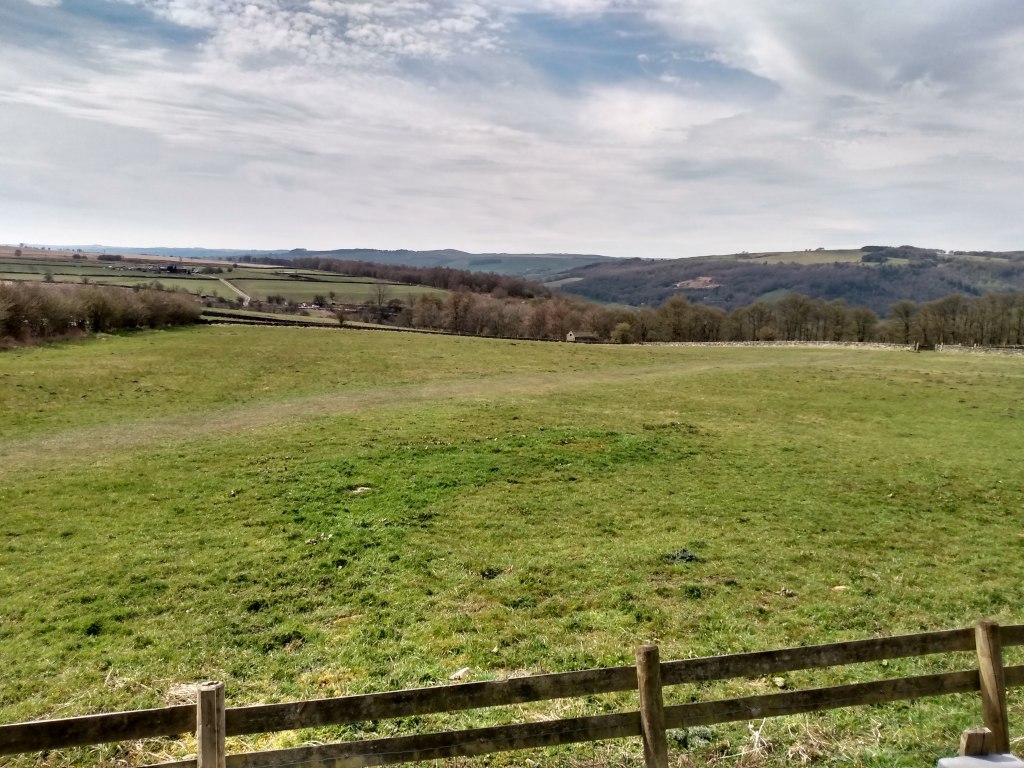
View over Derbyshire countryside, taken by Katharine Reedy, April 2022
In January 2022 I spent 4 weeks at an Anglo-Catholic church in a nearby town, as part of my lay ministry training. I somehow got busy after that and never posted these reflections. But, over a year later, they still make sense to me, so here they are….
My church experience has been fairly eclectic and itinerant – a mixture of Anglican parish churches, central London evangelical, Methodist, an independent community church with charismatic tendencies, and a church plant on a new estate. During the central London evangelical phase I at one point set up an ecumenical prayer group at my place of work, wanting to overcome some barriers and bring people of different Christian backgrounds together. (It wasn’t without its challenges but that’s a whole other story). Throughout this journey, I’ve discerned an increasing call to ministry, which took me back to my Anglican roots and led me to lay ministry training. I’ve also realised that much of what I’ve done, in and out of church, could be classed as “pioneering” and part of my training has included a course in Pioneer Mission Enabling. So I approached the placement church with openness and curiosity, wanting to learn about a tradition that I’m less familiar with.
My nearest two Anglican churches are in fact Anglo-Catholic, but somehow I had never felt this style of worship was for me. I couldn’t seem to get a handle on what it was about or how to be part of it. This time was different. What made the difference? Here, in no particular order, are some of the key elements.
The first thing was participating as a leader of worship. I must admit I felt some trepidation initially, as there seemed to be so much going on in the service and so many things to remember. The service moves around the physical space in the church according to what is being focused on. However, I was gently guided and directed by the priest and sacristan about where to stand, which way to point and how to carry out the duties I would be responsible for in the service. At times I felt like a baby elephant blundering around in a china shop, and my comfort zone quickly became a forgotten abandoned place, but somehow it didn’t matter.
The worship is colourful, theatrical and engages all the senses. There is incense, candles, icons and choral music. Those leading the service wear ornate robes. I hadn’t robed before, but on this occasion it felt entirely right – though I was reminded of the words of the song by Jarrod Cooper, which includes the line “in royal robes I don’t deserve”! I felt truly immersed in the beauty and mystery of God, whilst at the same time being reminded of Jesus’s physical incarnation and continued presence with us through the Holy Spirit. I loved the drama of it. As a performing musician it resonated with my experience of playing in an orchestra. It also brought to life the idea of the ‘divine dance’ in which the three persons of the Trinity interrelate and interact.
Secondly, the building itself is very beautiful, with many outstanding historical features. It evokes a sense of awe and reverence and provides a sacred space where people can find peace and encounter God.
Thirdly, use of body and posture is a key part of worship. Anglo-Catholic worship involves genuflecting, bowing, kneeling and crossing oneself. There is deep respect towards Jesus. Again, the words of the song King of Kings seem apt: “All within me falls at Your throne” “Your Majesty, I can but bow.” I found that by physically engaging my whole body, my mind and heart followed. One of the most moving moments for me during the service is when the gospel is read, and a member of the congregation steps forward into the aisle and opens their hands to receive the gospel book. Being the person reading the gospel felt like a great honour.
Fourthly, I started to understand why things are done the way they are, whether that’s the role of saints or the devotion to Mary. (There is a lot to be learned from looking at the lives and faith of those who have gone before us; and it was rightly pointed out to me that the mother of Jesus must be special). Seeing all this through the eyes of regular worshippers was helpful, together with explanations by the priest, and I also gained a lot from the book I was given on my last Sunday: “God’s church in the world: the gift of Catholic mission” edited by Susan Lucas.
I realised that a Catholic-style liturgy, with its focus on Mass (Holy Communion) can be very missional. It reminds us frequently of God’s presence with us and of His transforming power in our lives. It invites everyone to take part and there are many different roles, whether upfront or more behind the scenes. Over time, participation in this worshipping community results in transformed lives. Dare I say it, it felt more inclusive than some other churches I’ve been in. For me personally, I felt I could be myself, even though in a disorientatingly unfamiliar context.
Perhaps this was because the people were so lovely. There was a warm welcome and much kindness shown to me during my brief stay. Week by week, as I participated in the services and heard people’s stories, I gained a sense of a community with Jesus at the centre, walking together through life’s ups and downs. Although the worship is formal and liturgical, the attitude of people seemed mainly unassuming – mass is a regular spiritual discipline, that draws us into greater closeness with God just by the act of doing it. Being a Parish Church, it is available to everyone in the area. During my time there I was aware of people dropping into the church looking for support or spiritual help. I also had the chance to help at a funeral service which gave me an insight into how the church touches the wider community.
Gazing into the mystery and holiness of God, and participating in the sacrament of Mass, was a profoundly moving experience for me. The mixture of love and suffering that characterises Christian faith felt tangible. I was reminded that whilst we may make efforts to connect with God, He is looking right back at us with infinite love and compassion. God is active in our world, and His love is inclusive of all. It is our privilege as church to notice what He is doing and join Him in working towards His kingdom.
I’ve been thinking about what kind of prayer might be appropriate for our monthly drop-in community gatherings. We don’t plan to have a formal service, but over time we might like to pray together in some way.
I have created this short gathering prayer that reflects the character of our Good Shepherd community – before, during and beyond the pandemic. The opening sentence is from Romans 12:1-3 (The Message version).
Leader: Take your everyday, ordinary life – your sleeping, eating, going-to-work, and walking-around life – and place it before God as an offering. Embracing what God does for you is the best thing you can do for him.
All:Dear Lord, we are a community of companions on a journey together.As we gather today we want to celebrate Your love and discover more about You. We come as we are, knowing that You care for each one of us and understand our worries and concerns.Many of us are weary and long for rest and refreshment.We open ourselves up to your presence, and ask you to fill us with your joyful and life-giving spirit.Please be in our midst as we gather, and inspire us so that we are ready to share your message of hope with those around us and with the wider world.Amen.
Church of the Good Shepherd community and friends
I’ve also included the Lord’s Prayer (Messy Style) which was written by others in our church. This is not my own work, but I like it and wanted to share it.
Our Father God,come, and be our friend for ever.Help us to love as you love us.Give us each day the things we really need.Forgive us for the unkind and thoughtless thingsthat we do and sayand help us to forgive those who hurt us.Keep us from all harm,and place your hope, light, love, joy and peace in our hearts.Amen.
If you would like to, make these prayers your own. God bless.
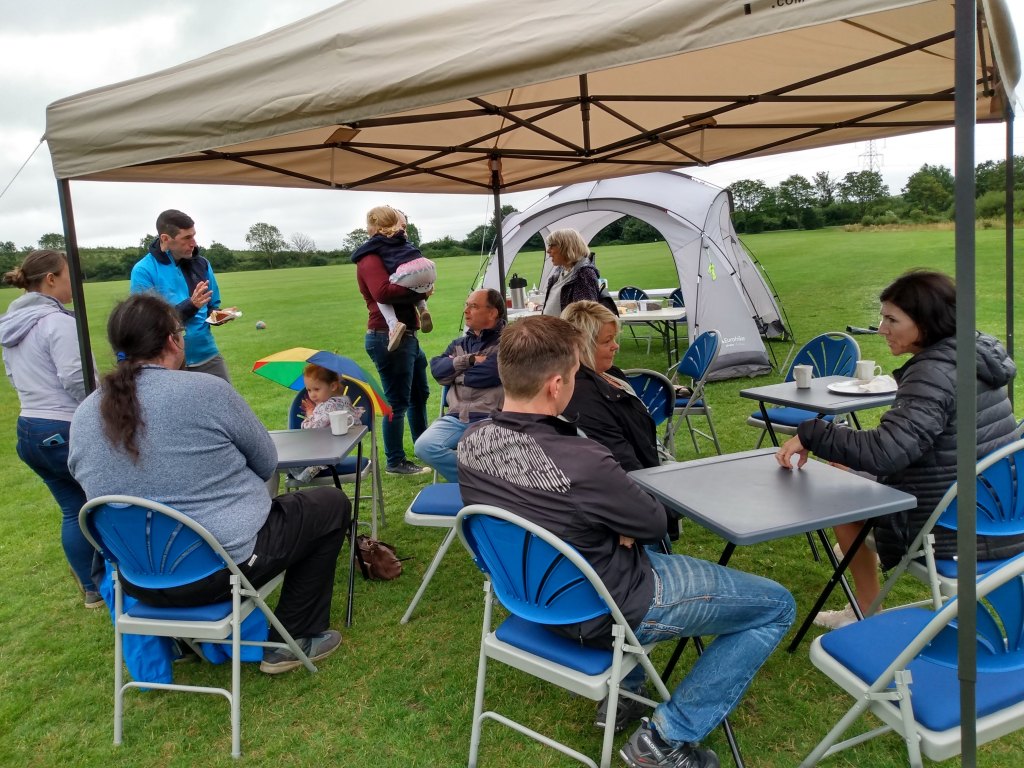
Recently our church (Church of the Good Shepherd Sandhills) held an informal social drop-in morning for church members and the wider community. One of the first tasks facing us was to figure out how to put up the gazebo lent by a family who were not going to be there in person. It took about 10 of us on the job, figuring out what to do and trying different approaches. We didn’t all know each other that well beforehand. I start by mentioning this, because it felt great tackling the job together, and reminded me that discipleship is about doing life and overcoming challenges together!
The Fresh Expressions journey
“Fresh Expressions are new forms of church that emerge within contemporary culture and engage primarily with those who don’t ‘go to church”
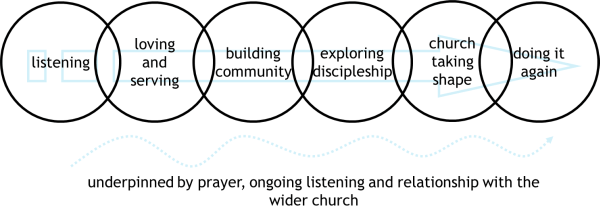
The Fresh expressions journey involves several steps to guide the development of a Fresh Expression, shown in the diagram below. These can be summarised as “Listen, Love, Community, Share Jesus, Church, Repeat.” They are overlapping and not necessarily linear, but do help those pioneering a Fresh Expression to see what the next step might be.
The church to which I belong is a church plant on a new estate on the south-east side of our town, a growing market and commuter town of around forty thousand people. The church is now eight years old and my husband and I have been there for half that time. It originally grew out of Messy Church and still has a very healthy focus on children and young people. There are around twenty-five adults who regularly attend, and from ten to twenty children, although this fluctuates.
How did the church develop?
At the time when these particular new estates were being built, a Community Missioner Priest was employed by All Saints, the mother church, to lead the initial outreach work and to engage with local residents. The Sandhills Community House was open from April 2011 – August 2016 as part of the Sandhills Community Action Project. During that time the local Voluntary & Community Action service commissioned some research on Creating social value in new communities (2014), which identified that “feelings of isolation is one of the most common experiences reported by the residents we engaged with right across the age spectrum” (p.11).
This initial phase of the church’s development involved listening, loving and serving, building community in the process, as the pioneer missioner discerned and responded to the need for companionship and community, particularly amongst young families. There was a lot of drinking coffee, sharing life and building relationship. The first three stages of the Fresh Expressions journey therefore happened together over a period of time.
A regular Messy Church gathering started at the Community House (‘Exploring discipleship’ stage) and by 2014 had gathered enough momentum for Church of the Good Shepherd to start holding regular services each week. A team (and Parochial Church Council) was gathered to lead the new church, with a lot of support from All Saints. The style of church was very different to the mother church, but in the context of the new estates it worked. Families had a place where they could get together regularly and a community they could be part of.
Where are we now?
The Community House closed in 2016, just before the arrival of a new vicar. This heralded a time of change. Over time, many of the original church members dropped away. Some of this was because families moved on, or children outgrew the Messy Church format. Perhaps also for some people, engagement with church had been mainly limited to Sundays once a month, which had restricted the opportunities for much real sharing of life (Discipleship) to take place.
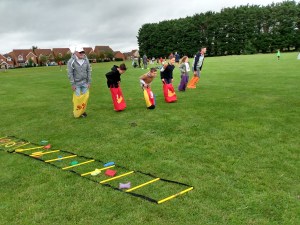
At the current time we are once again in a time of listening, loving and serving, aiming to build community. The COVID-19 pandemic meant that many plans were put on hold, though regular Sunday services and a weekly house group continued via Zoom. However, it has also provided some opportunities. We have started regular monthly drop-ins at Astral Park Community Centre. As the Centre is now unstaffed, our church has the go-ahead to serve coffee and cake to the community – outside the Community Centre so visible to all – on a Sunday morning. We are also leading different themed activities, most recently a mini Olympic games.
We are using this both to build church community and to find out from the wider community what matters to them. So far, areas being highlighted include friendship and belonging, echoing the original research by the Voluntary & Community Action service. There are not enough facilities for children and young people, and the roads on the estate don’t feel safe for children to cross. A Community Outreach Worker employed by the Baptist Church has lived on the Sandhills Estate for 20 years, since the first houses were built, and commented on the social divisions that exist, with the need for reconciliation in places.
Where next?
The idea of a journey implies forward movement, but in reality the process seems more circuitous. It seems to me that we are revisiting some of the building blocks of church. Our listening, loving and community building are particularly important as we come out of the pandemic. We are looking to work in partnership with others in the community as we move forward, being aware of the impact of the pandemic on many people’s mental health and well-being. We are aware that ‘the community’ is not one cohesive group and our listening must take in different demographics. The expression of church that emerges may well be different to what has gone before.
Are other routes possible? One scenario is that we will grow a number of smaller church communities, starting with current Good Shepherd church members and their friends. The character of these groups will depend very much on the nature and interests of those who are drawn into them. It is also important to build community traditions and events that different people of all ages can enjoy, such as the annual Beer and Carols event, and carol singing on the street. Alongside this, there are plans to employ a Community Missioner to lead a wider range of outreach activities.
Learning and growing together
Mini-Olympics
The gazebo experience gives a clue to one of the key ingredients of authentic church. As people loved by God, our calling is not to do religious things so much as to follow Jesus the Good Shepherd, journeying with others through the reality of life’s ups and downs. Our first two monthly drop-ins have been joyous and life-affirming occasions. They reflect the Messy Church values of creativity, hospitality and celebration. We are happy sheep and we long to welcome others!
Sharing Jesus (what we refer to as discipleship) happens naturally as we support and learn from each other. I wonder if it is actually the most important thing in growing Fresh Expressions of church?
References
Karl Leathem and Joelle Bradley (Lodestar), Creating social value in new communities, 2014
One of the things I have been reminded of over the last 6 months is that all of us, church members or not, are on a journey. All of us have had our lives impacted by the pandemic in ways that will most likely take years to come to terms with. In the restricted existence of lockdown, I’ve become more tuned in to how God is active in my life and the lives of those I encounter each day. Daily walks (and occasional runs) have become a really important part of my routine. I’ve realised that like many others I was suffering from what Ruth Valerio, Churches and Theology Director of A Rocha UK, calls Nature Deficit Disorder.
In 2014 the Sandhills Community Action Project report identified that “feelings of isolation is one of the most common experiences reported by the residents we engaged with right across the age spectrum.” Whilst parts of the community are now more established, new houses are still being built. There is a regular turnover of people moving in and out of Sandhills and the neighbouring estates. Various communities exist, for example, around school, football or dog walking. However, loneliness is undoubtedly still a factor, especially after several lockdowns.
As church, we are fortunate to have regular times and spaces (whether face-to-face or online) where we can be with others, reflect before God, share our lives and feel refreshed. Perhaps our main gift to our community is to invite people to join us. To do that we need to be visible. Over the last year or so, being outdoors has often been the only way to meet anyone at all outside of our households. At the present time it still offers the best way of connecting with others.
Hope after COVID event poster
Bringing all this together, as a church community we decided to host an open-air drop-in (next to the local community centre) with refreshments, and some gentle low-key activities to help us all to reflect on what we are grateful for, what we have lost and what we have learned. We’ll offer a tangible sign of hope to take away for those that want to. We’ve named this event “Hope After COVID”. Our spirit is very much “have a go”, and we are seeking to learn more about the needs of our community as we try something new. Everyone is different in their response to the pandemic, so we will be listening carefully to people’s concerns.
By sharing some of the things that help us find peace – the Cave practices – we aim to communicate God’s love and the value he places on every single person. It is not the end of the road, but the first step on the next part of our journey – as individuals, as church and as community. What we learn will feed into the larger new estates mission project that is just starting. Watch this space for future updates!
One of the challenges of the last year or so has been staying connected with our church community. During that time, community got much more local. For me, in lockdown 1.0, it mainly consisted of the four people living under our roof – one of whom was visiting from overseas and ended up staying for three months instead of three weeks. We lived, ate, worshipped and relaxed together within our household, sticking to the belief that our own resources are a table set for more than one. We also grew closer to our immediate neighbours.
Zoom church
What about church? I belong to a relatively young church that meets on a new estate on the other side of town. It is young in terms of age of those who go along, and young in that it’s only been going for 7 years. We don’t have a building, and meet regularly in the local school or community centre. However, since March 2020 we haven’t been able to meet very much in person at all, and services have been online, or hybrid.
The church grew out of regular Messy church gatherings, and the focus on families and children is woven into its DNA. There is a celebratory, creative and hospitable character to church gatherings. Although my husband and I are slightly older and without young children or grandchildren, we have found a home there. The relatively small size of the church community means that everyone knows each other and everyone’s contribution is needed and valued. The spirit is very much ‘have a go’ and we adapt to changing times.
When we went into lockdown, we moved quickly to Zoom, and held combined services with the nearby village church that our vicar is also responsible for. As a result, our Sunday services became more traditional, though retaining elements of our church culture, such as more informal worship style and children showing their artwork – much looked forward to by all each week.
One of the treasures of Anglican tradition is the well-established structure of services. This means that every week we hear the bible read and taught, we pray together, there is sung worship and words that we say together to express and affirm our faith. We share communion most weeks. As we meet together, these core elements help to bring us back to what is important. At the same time, there is flexibility in how they are interpreted and we are currently looking at how we develop our services for the future to be more “us.”
Being present in the community and showing hospitality has been more challenging over the last year. I’ve realised that hospitality can be about giving time as well as sharing food. Although we are small in number, we’ve looked for ways to connect and reach out. We have supported wider community events such as our town’s virtual lights turn-on, by contributing song videos created by musicians and singers from our church. We have also donated to the food bank run by our local Leighton-Linslade Helpers organisation. We have prayed for those who have requested it, for example, via our social media channels.
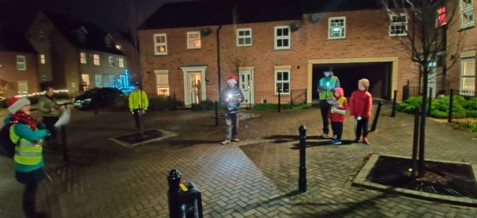
Carol singing, December 2020
My role is often to remind people of our commitment to the wider world, and to simply suggest we go outside. In a gap between lockdowns a small group of us went carol singing on the estate.
Ian Adams comments that “In turbulent times we feel weak. The church feels weak” (Adams, p. 215). This is true – we are small in number, and can’t solve all the many problems we see around us. However, we can embody and communicate the presence of Jesus. Our small community has held together and become tighter throughout the pandemic. We aim to point the way to the light of the world, who stepped down into darkness. We want to share the hope that we have.
Reference
Adams, Ian (2018) Epilogue: a mission spirituality for turbulent times. In: Missional conversations, edited by Cathy Ross and Colin Smith. London: SCM Press.
On March 24th 2020 office life abruptly ceased and along with thousands of others, I became a home-worker – and entered the existence of a hermit. It was a shock to say the least (to those I live with too, who were suddenly exposed to much more of my presence than they had been used to)! In the higher education sector where I work, there was much talk of a pivot to online, but in fact there was a far more significant life pivot occurring….
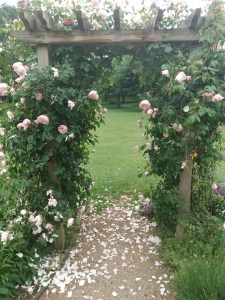
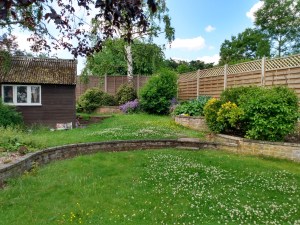
My back garden
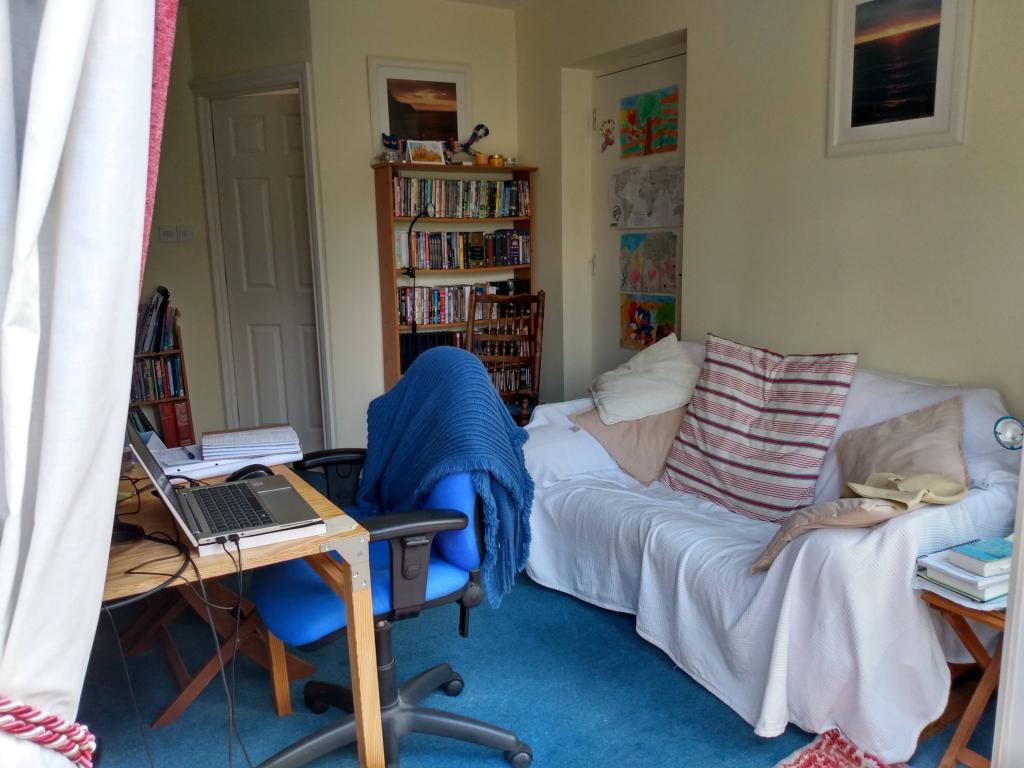
I set up a home office in my back lounge, aided by a piece of wood which my husband had fortuitously attached to the book shelves and which now provides the resting place for my laptop. This room very soon became referred to as my ‘cave’, and is the place where work, study and – for much of the last year online church – has happened. The back lounge looks onto the back garden, which is a kind of cave-extension and place of spiritual nourishment.
This reorientation has been an opportunity to refocus and there are a few things that have helped. There are daily disciplines that ‘hold’ me. The amount of time in front of a computer screen meant that I was struggling with information overload. Early in lockdown 1.0 I discovered the daily spiritual practice of lectio divina, “divine reading”, brought to me through the Lectio 365 app. It’s something I listen to rather than read. Sometimes I do this sitting in my cave, looking onto the garden, but often I tune in whilst walking, a daily discipline I’ve found essential in maintaining physical, mental and spiritual health. I try to reflect back over the day in the evening, being grateful for everything good, and acknowledging before God anything that’s weighing on my mind – the practice of daily Examen which comes from Ignatian spirituality. Regular conversations with my spiritual director (a grand term for a kindly companion on my journey) have been greatly encouraging too. Music is a source of joy, both listening and playing, though opportunities to play with others have been few. Once a week I go for a run.
Prior to lockdown I would have described myself as an activist and an extrovert. I enjoy organising events and I derive energy from being with other people. Over the last year or so, most of the trappings of everyday life have been stripped away and I’ve been through a process of mourning things and people who are no longer around. I’ve had to get real about who I am, both good and bad – what Richard Rohr refers to as Shadow work. I realise that I’ve changed in some ways, I hope for the better, but it’s work in progress. In the relative isolation of my cave I have been “coming home to myself” and discovering peace in my circumstances. I’ve been thinking a lot about the relationship between prayer and action and how they can’t be separated.
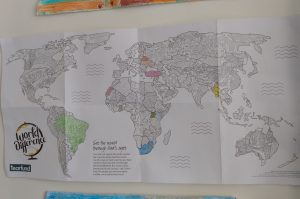
Map of the world by Tearfund
At the same time, I’ve been connecting with the wider world through prayer and through contact with friends and colleagues in different parts of the globe. Observant people in online meetings have picked up on the map stuck to one of the doors in my ‘cave.’ There is no limit to where God’s spirit can go.
What has become more apparent over the last year is the beautiful truth voiced by Julian of Norwich – that underneath and through everything runs God’s unceasing deep love. Our identity is that of deeply-loved children of God. As it says in 1 Corinthians 13 verse 8: “Love never fails.” This is the true message of the Bible, rather than the guilt and shame that people may feel when they think about God and Christianity. Ian Adams describes the solitude involved in cave-dwelling as demanding and challenging. My cave has been a place of loneliness, lament, and weariness, but also of peace, rest and hope. There are no shortcuts, but be encouraged: “we are at the very centre of a relentless love that carries all before it” (Adams, p.19).
References
Adams, Ian (2010) Cave, refectory, road. Norwich: Canterbury Press.
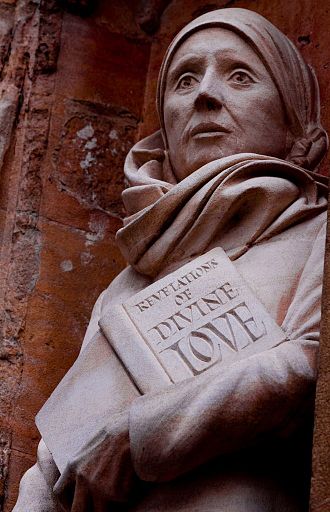
Julian lived from approximately 1342 – 1416 or so. She was an important figure in medieval times who challenged prevailing Christian views by sharing her radical experience of a loving God who displays motherly qualities, as revealed to Julian in a series of visions of the crucifixion. A powerful if untutored writer, Julian authored the first book in English by a woman.
After a near-death experience, she took vows to become an anchoress (hermit) and spent the rest of her life in a cell attached to St Julian’s church in Norwich, from which she took her name. Julian lived through huge upheaval, including two pandemic-like plagues. Yet she saw God as looking on us with immense compassion and without blame. God does not condemn or accuse us, and He wants us to know how much we are loved.
She wrote the much-quoted words:
“All shall be well, and all shall be well, and all manner of thing shall be well.”
(Julian of Norwich, Revelations of Divine Love)
This resonates with the words of Captain Sir Tom Moore, “tomorrow will be a good day” – which I referred to in a previous post, From Carousel to COVID
Julian interacted with the outside world through three windows: one where she received food and water and had her basic physical needs met; the second facing onto the church, where she received the sacraments, and the third looking on to the busy street outside, where Julian received visitors and chatted to them. Ian Adams in his book Cave, Refectory, Road, uses these three windows as a metaphor for different aspects of mission spirituality:
Cave – personal wellbeing and health, including spiritual wellbeing
Refectory – our church context
Road – our window onto the world and metaphor for our pioneering context.
Mission here refers to God’s mission in the world and is not restricted to what the church might be doing. It is important to note that spirituality and mission are inextricably bound up with each other and can’t be separated. There is overlap between all three aspects of mission spirituality and the balance is important in life’s rhythm.
Julian’s insights seem particularly important for the time we are living in – a kind of dark ages in which many feel isolated, unloved and fearful. Margaret Coles comments that:
Julian’s kind, comforting words are as fresh and relevant as though she had spoken them a minute ago.
When you walk through a storm Hold your head up high And don’t be afraid of the dark
At the end of a storm There’s a golden sky And the sweet silver song of a lark
Walk on through the wind Walk on through the rain Though your dreams be tossed and blown
Walk on, walk on With hope in your heart And you’ll never walk alone
You’ll never walk alone
Walk on, walk on With hope in your heart And you’ll never walk alone
You’ll never walk alone.
Excerpt from You’ll Never Walk Alone (Leighton-Linslade Gala Orchestra concert, February 2020)
Originally from the musical Carousel, first staged in 1945, “You’ll never walk alone” has become a global anthem that resonates with people across the world in tough times. It was written towards the end of World War 2, at a time when “every American was grieving the loss of a brother, son, father or friend…” (Oscar Andrew Hammerstein, grandson of the composer Oscar Hammerstein). “You’ll never walk alone” has been covered numerous times, and was used by Liverpool Football Club as their anthem.
In 2020, people once again turned to it as a song that symbolises hope in difficult circumstances, with a recording made by Michael Ball with Captain Tom Moore and the NHS Voices of Care Choir. Over the last year, when other activities have ceased, the birdsong has been louder and sweeter than any I can remember. We have often heard and seen skylarks when out walking. And we have walked a lot.
Many have felt alone during this pandemic. The words of the song speak to a deeply-held hope and conviction within human hearts, that we are not alone in the mess of our lives in this broken world. The simple but powerful melody appeals to many people of different generations and cultures and has transcended the original context in which it was written. It speaks of hope and carrying on in the midst of tragedy and heartbreak. It seems to be generally applicable enough to mean something to people in all kinds of circumstances.
The ultimate concern here is about looking to the future rather than dwelling on the tragedy of the present. This is a future where no-one will walk alone. It is not hard to be reminded of the message of the Bible, with its many stories of journeying and pilgrimage, and of God’s everlasting faithful love. Jesus is referred to as Immanuel, “God with us” and promises that He will be with us till the end of the age. In our own time, we also think of the words of Captain Sir Tom Moore, “tomorrow will be a good day.”
I believe that one reason for the enduring appeal of this song is that it does have genuine perspective on life. God or Jesus are not explicitly mentioned, so we don’t know the precise source of the hope or what exactly it means to “never walk alone.” In our present time, the “hope in your heart” referred to in the song might be the prospect of meeting a loved one again, or hugging someone, or having a holiday, or just going to restaurant for a meal. It might be good friends who stick with us through the ups and downs of life. It might be rest and healing from months of stress and burnout.
However, although the song talks about hope and never being alone, for me it doesn’t go far enough. I believe that we all need something more to hang onto. My experience over the last year is that God is faithful and when the going gets tough, his love is real. The artwork I have created reflects this. It portrays the journey from Eden to the new Jerusalem. It highlights the promises to Noah and Abraham – who both trusted God as they set out into unknown scary territory. Words from Psalm 23 and Psalm 119 remind us that God is with us and shows us the way. The cross of Christ has redeeming blood, and life-giving water. The single red sheep symbolises the Lamb of God. I used luggage tags to write the Bible verses on because this is in keeping with the journey theme and a reminder of the hope that we carry with us as we go through life.
One of the last events I was involved with, just before lockdown was a charity concert which included “You’ll never walk alone” on the programme. The audience sang along and it felt like a hymn. A lady in the audience talked to me afterwards about some of the hard things she had been through and how much the concert had helped her. I feel moved and also comforted when I think about this event. God walks with us, he never leaves our side and he lives within us. As followers of Jesus, we have a role to walk alongside those who are hurting and traumatised to bring encouragement and hope.
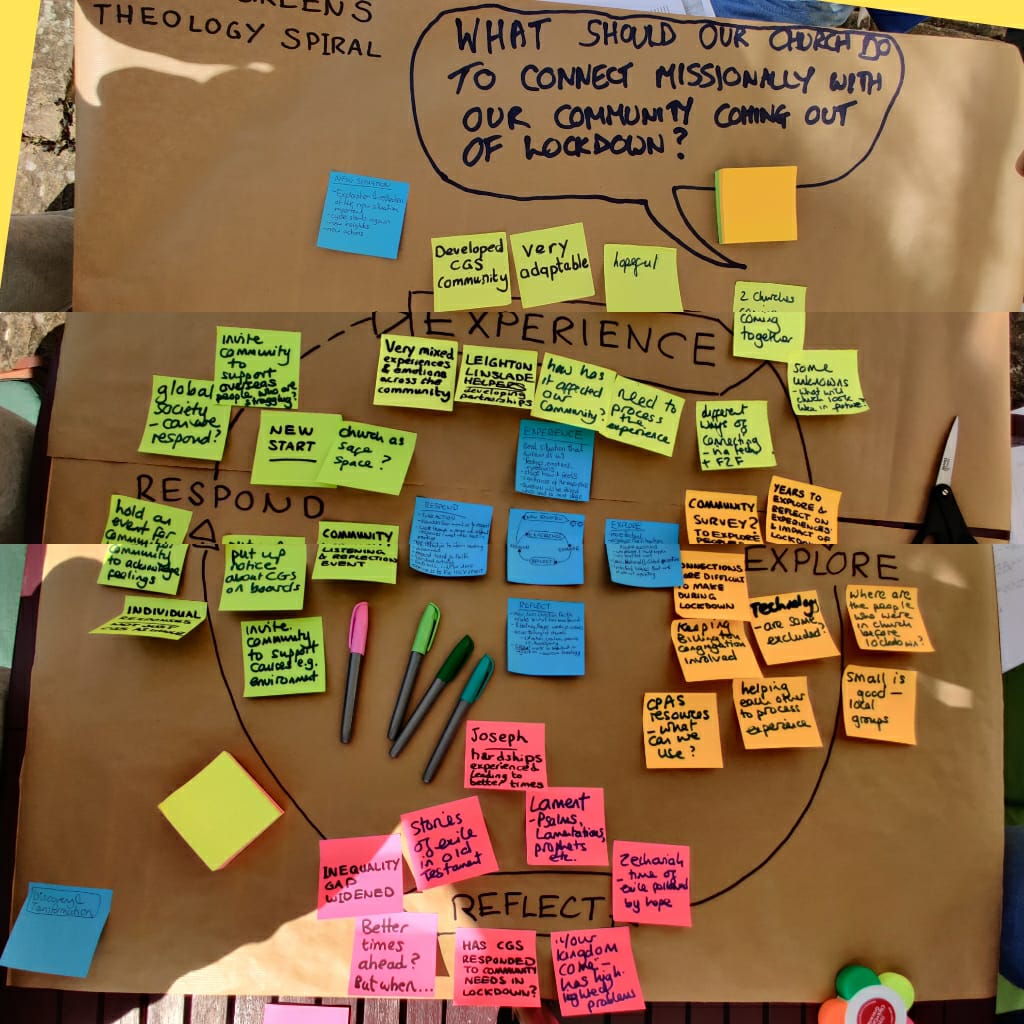
Over the last few weeks our CMS pioneer training group has been thinking about some tools to help us reflect. The “Doing theology” reflective spiral by Laurie Green is an excellent way to bring reflection and action to bear on each other in an interplay that he terms “praxis.” It is about dissolving the distinction between theory and practice. Green’s model helpfully starts with our lived reality (Experience) and invites us to Explore, Reflect and Respond. This then takes us back to Experience, but with new insights.
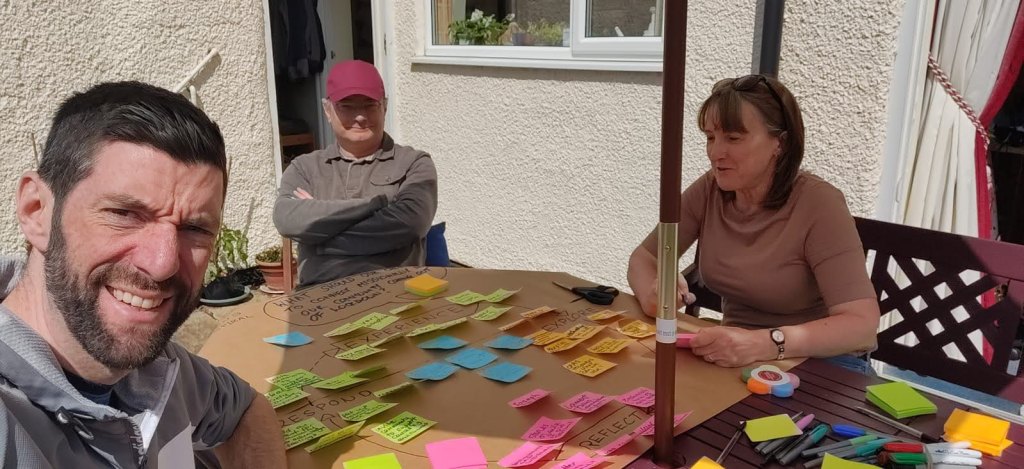
Laurie Green comments that “theology is best done in a group” (Green, p.22) so our little band of pioneers-in-training from Church of the Good Shepherd (CGS) Sandhills met one Saturday morning over coffee to pool our brains. The image below shows what we came up with.
Our question is “What should our church do to connect missionally with our community coming out of lockdown?”
Experience
We first of all thought about where we are now. During lockdown our church, CGS, came together with the other church our vicar is responsible for, St Michael & All Angels, Billington, for joint services on Zoom. CGS members proved to be very adaptable and quickly moved to using technology to connect both on Sundays and midweek. We also worked in partnership with Leighton-Linslade Helpers to join in with virtual events and support their foodbank. Now that our church communities are able to meet face-to-face, we are holding hybrid services. Not everyone joined the online meetings – so we celebrate the friendships made, but recognise that some people have drifted away. We’re also aware that many around us have never connected with church in the first place. Before lockdown we planned to hold a community lunch, but weren’t able to go ahead. Many of us, church members or not, are struggling with grief, loss and weariness. We need to process the experience we have been through.
Explore
We agreed that it had been challenging to stay connected during lockdown. Technology works for some but has excluded others, often the more vulnerable such as elderly people and children. We wondered where some of the people are now who were in church before lockdown. Small local groups have been valuable, and connecting more with our neighbours. We acknowledged that it could take years to come to terms with the experiences and impact of lockdown. Making time to process things together – church and wider community – feels important. We could get useful perspective from community leaders such as local councillors. The Resources for the recovery phase produced by CPAS are also very helpful.
Reflect
This part of the discussion was particularly valuable in highlighting relevant parts of the Bible that individually we might not have thought of. There are many stories of exile in the Old Testament. For example, Joseph, whose challenges and hardships lasted for many years, but eventually led to better times. It provoked the question of when these better times might be for us…. The lament found in the Psalms, prophets (for example, Zechariah) and book of Lamentations gives voice to the sadness and loss that many are feeling. We felt that the inequality gap in society had widened and wondered if our church had done all it could to respond to community needs during lockdown?
Respond
I have noticed when talking to others that people’s responses to the pandemic are very individual. We need to allow for these personal responses, as well as providing opportunity for us all to process feelings collectively. One possibility that we are actively investigating is a “Hope after COVID” event for people to acknowledge both losses and gratitude, and relax together over tea / coffee and cake. This is not a one-off but the first step of many. In the longer term we also talked about bringing people together around causes such as environment or mental health. It will be a case of trying something, listening and learning, with the “Doing theology” spiral a useful structure to guide us.
The team in action….
References
Green, Laurie (2009) Let’s do theology, chapter 2, A new way to do theology.




 On the journey