I picked up this book just intending to gently browse one or two chapters and got hooked! Edited by Jonny Baker and Cathy Ross, “The pioneer gift” is a collection of case studies by 12 individual pioneers from very different backgrounds and contexts, in which they share what it looks like to work with their gift in specific settings.
What really inspired me about the book is the originality and boldness of the pioneering it showcases, and also that I could relate many of the examples to my own experience. Particularly exciting (and unexpected) is the overlap with my day job at the Open University – for example, the chapter by Jim Barker on Communities of Practice – and with life in general, for example, the importance of hospitality in mission. “The Pioneer gift” also speaks into my current church community. We are embarking on a big mission project and the insights about context and looking for what God is already doing are very relevant.
The case studies are very individual and varied, showing that for each of us, God can use our particular gifts and experience to achieve something new – we don’t have to fit a particular mould. Indeed, one of the messages of the book, expressed by Jonny Baker in Chapter 1, is that pioneers tend to have “the gift of not fitting in” because they can see different possibilities to what exists at present, and are people with the will and ability to bring their vision into being. As Gerald Arbuckle puts it, pioneers are “dreamers who do”. I’ve quite often felt a little out on a limb in church situations so it was a relief to read that this is normal when challenging the status quo. Cathy Ross in her chapter on “Pioneering missiologies: seeing afresh” picks up on this, talking about ‘theological homelessness,’ discomfort and pilgrimage.
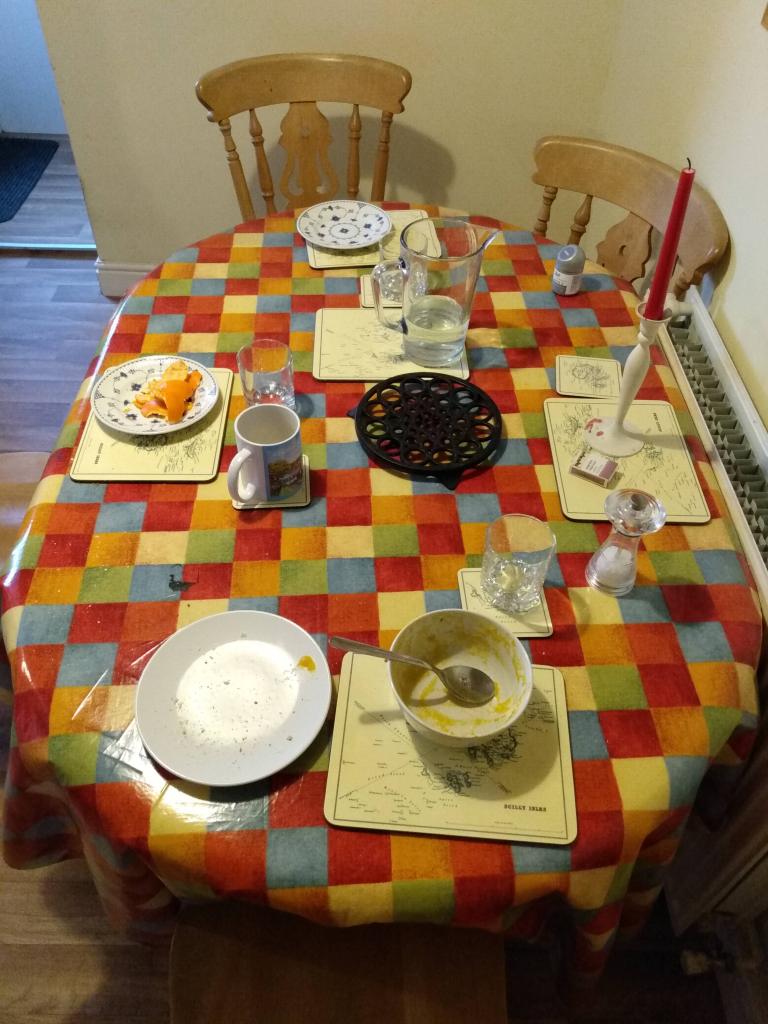
Several themes running through the book resonate with me on a deep level. One is the central role of hospitality in mission. Cathy Ross talks about “a missiology of the kitchen table”. Related to this is the idea that like Jesus we go to people in vulnerability and weakness rather than with all the answers, and live on their terms. It challenges our notions of success, and of measuring church growth only by numbers attending services on a Sunday. Instead, it puts the focus on the quality of relationships, on partnership and on living humbly alongside our fellow human beings, sharing the gospel in the communities we’re part of.
Numerous other contributors pick up on this idea of missional community being an open table where all are welcome and everyone learns together – what Kim Hartshorne refers to as “the sacramental pattern around eating together”. It fits with the idea of Communities of Practice, in which “learning…fundamentally consists of social participation” (Barker, p.99). As we share life together, we learn together. An integral part of my life has been offering hospitality in my own home and joining together with others – in professional Communities of Practice too – to create larger-scale gatherings for people to come together for food, conversation and learning.
I was struck by the idea of “little theologies” (Cathy Ross, p. 34) – knowing a local context or community in enough depth to meaningfully communicate the good news of Christ there. This fits with subsidiarity, which is about self-determination and empowering people to make decisions on the smallest local level possible. Karlie Alloway in chapter 5 “Pioneer mission in community” talks about the importance of doing pioneering mission together with others, so that we not only communicate the resurrection, but also live out its reality (Alloway, p.80). This is a clear message in the Bible too (for example, John 13:34-35 and 1 John 3).
Beth Keith’s chapter -“To pluck up and to pull down, to build and to plant” (quoting Jeremiah 1:10) highlights the tension between traditional and emerging forms of church, and that traditional structures and practices need to be dismantled in order for new forms of church to emerge. I agree with her view that “The cultural divide between church and society today suggests our new contexts are just outside the doors of our churches” (Keith, p. 135).
Andrea Campanale and Emma Nash both tackle the important area of how we define “sin” in our current time. It is more helpful to address the false shame and sense of estrangement that people – perhaps especially women – feel, than to focus exclusively on specific acts of wrongdoing. Andrea Campanale points out that “identity is no longer externally determined but dependent on our sense of self (p.183).” People’s sense of self can be very distorted but the stories in our faith tradition provide a different narrative of God-given identity, love and forgiveness. This offers hope and healing to those whose lives are marred by misplaced shame. Anna Ruddick’s research (Chapter 6, “Transformation”) suggests that “for transformation to be coherent and lasting an individual must have a sense of self that is positive and affirmed” rather than try to fit into a different cultural group. (Ruddick, p.65). It’s not about trying to drag people into our existing churches. We should also not neglect structural injustice – where people have been the victim of sin this must be called out (Nash, p.209).
Overall, I didn’t find much to disagree with, although some of the chapters were quite academic in nature and there was a bit of jargon to get to grips with (e.g. sodal and modal, acculturation, ecclesiology, pneumatology, subsidiarity). So I needed a dictionary in one hand while reading! Once I got behind the terminology, most of it made sense. I did have more difficulty relating Doug Gay’s chapter to my own situation as he is an ordained minister who favours an attractional model, centred on worship that takes place in church buildings. I agree that worship is very important and can have a profound impact on people; however, for the last 16 years of my life I have worshipped in school buildings and don’t see a church building as necessary to build relationships and community.
This book has expanded my thinking in many ways, with lots of questions to ponder and some possible avenues for action. These include:
- exploring what hospitality and mission looks like in different communities I’m part of, and deciding which community to focus on
- seeing if the Community of Practice model would help to bring people from any of the groups I’m part of together for food, conversation and journeying together.
- being a ‘contemplative activist’ (Alloway, p.91-2) with action flowing out of a life of prayer.
To take forward the ideas that are forming, I will need to look at some of the more practical ‘how to’ guides that exist and talk with others. This book has been great at opening my eyes to the possibilities and encouraging me to feel I could be part of what God is already doing.
 On the journey